**NTSB Launches Federal Probe into Fatal Texas Tesla Crash**
**FOR IMMEDIATE RELEASE**
**The National Transportation Safety Board (NTSB) has initiated a comprehensive investigation into a recent fatal Tesla crash in Texas, collaborating closely with the National Highway Traffic Safety Administration (NHTSA). This federal inquiry aims to determine the root causes and contributing factors of the tragic incident, focusing on vehicle performance, safety systems, and environmental conditions to enhance future transportation safety.**
—
## Federal Agencies Initiate Joint Investigation into Fatal Texas Tesla Accident
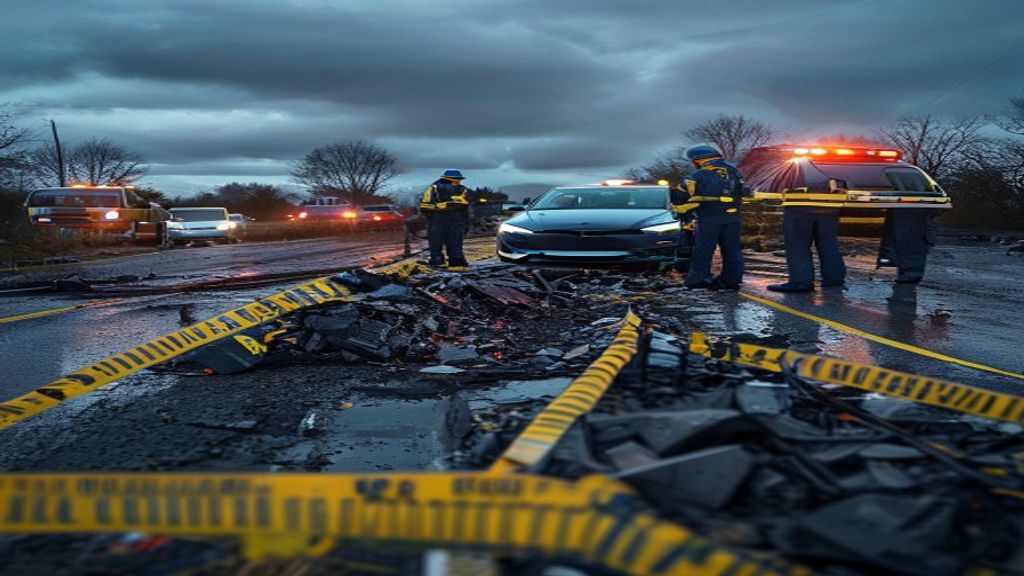
A fatal vehicle accident involving a Tesla in Texas has prompted a swift response from federal safety regulators, with the National Transportation Safety Board (NTSB) announcing a full-scale investigation. The NTSB, renowned for its meticulous probes into transportation incidents across all modes, will work in tandem with the National Highway Traffic Safety Administration (NHTSA) to uncover the circumstances surrounding the crash.
The incident, details of which are still emerging, occurred in Texas and resulted in fatalities. Given the NTSB’s mandate to investigate significant accidents that could yield critical safety recommendations, their involvement underscores the complexity and potential systemic implications of the crash, particularly in the context of advanced vehicle technologies.
### The NTSB’s Unique Role in Crash Investigations
The NTSB operates as an independent federal agency, tasked solely with investigating civil aviation accidents, certain types of highway crashes, railroad accidents, marine accidents, and pipeline incidents. Their primary objective is not to assign blame or enforce regulations, but to:
* **Determine the probable cause of accidents.**
* **Issue safety recommendations** to prevent recurrence.
* **Advocate for safety improvements** across transportation sectors.
In automotive incidents, the NTSB typically becomes involved when crashes involve emerging technologies (like advanced driver-assistance systems or autonomous driving features), unique operational factors, or have the potential for significant public safety lessons. Their investigations are often lengthy and involve detailed forensic analysis, data retrieval, and reconstruction.
### NHTSA’s Concurrent Probe and Regulatory Authority
Working alongside the NTSB, the National Highway Traffic Safety Administration (NHTSA) brings its own distinct responsibilities to the investigation. NHTSA is the federal agency responsible for:
* **Setting and enforcing vehicle safety standards.**
* **Investigating safety defects.**
* **Administering vehicle recall campaigns.**
* **Conducting research and development into highway safety.**
While the NTSB focuses on understanding *why* an accident happened to recommend improvements, NHTSA’s investigation often aims to determine if a vehicle or component defect contributed to the crash, potentially leading to recalls or regulatory action. This two-pronged federal approach ensures a comprehensive examination from both a preventative safety and regulatory compliance standpoint.
## Broader Implications for Vehicle Autonomy and Safety
This latest investigation comes amidst heightened scrutiny of advanced driver-assistance systems (ADAS) and the broader push towards autonomous vehicle technology. Each such incident provides invaluable data points for regulators, manufacturers, and the public regarding the performance and safety of these evolving systems in real-world conditions.
The findings from investigations like this are crucial for:
* **Informing future safety standards and regulations.**
* **Enhancing vehicle design and software protocols.**
* **Educating drivers on the capabilities and limitations of existing technologies.**
The NTSB’s involvement signals a deep dive into all available data, including vehicle telematics, event data recorders (“black boxes”), sensor logs, and potentially video footage, to construct a complete picture of the moments leading up to and during the crash.
### Understanding the Investigative Process
Federal crash investigations are methodical and can span several months or even years. The general process often includes:
* **On-scene data collection:** Gathering physical evidence, witness statements, and initial vehicle assessments.
* **Vehicle forensics:** Detailed examination of the vehicle’s components, software, and data recorders.
* **Accident reconstruction:** Using collected data to model the dynamics of the crash.
* **Safety recommendations:** Drafting proposals for manufacturers, regulators, or other entities based on findings.
* **Final report publication:** A comprehensive document detailing the investigation’s findings and conclusions.
## Texas Context: A State at the Forefront of Tech and Transport
Texas, a rapidly growing state known for its innovation hubs and extensive road networks, is a critical environment for the deployment and testing of new transportation technologies. The state’s dynamic landscape makes it a relevant location for federal agencies to examine incidents that could have national safety implications.
## Frequently Asked Questions
### What is the primary goal of the NTSB’s investigation?
The primary goal of the NTSB’s investigation is to determine the probable cause of the accident and issue safety recommendations to prevent similar incidents in the future. They focus on understanding *why* the crash occurred rather than assigning blame or enforcing regulations.
### How does the NTSB’s role differ from NHTSA’s?
The NTSB is an independent fact-finding agency focused on improving transportation safety through recommendations. NHTSA is a regulatory agency responsible for setting and enforcing vehicle safety standards, investigating defects, and administering recalls. While both investigate accidents, their ultimate objectives and powers differ.
### How long do such investigations typically take?
Federal investigations of this nature can vary significantly in duration, often taking several months to over a year to complete. The timeline depends on the complexity of the crash, the amount of data to be analyzed, and the resources required for a thorough forensic examination and reconstruction.
—