## DOT Eyes Removal of Manual Controls for Fully Autonomous Vehicles, Signaling Shift for Future Mobility
**The U.S. Department of Transportation (DOT) has proposed removing the requirement for manual brake pedals and other traditional human controls in vehicles designed to operate exclusively by automated driving systems (ADS). This pivotal move, initiated under the Trump administration, aims to eliminate regulatory barriers for truly driverless cars, potentially accelerating their development and deployment by allowing manufacturers greater design freedom for Level 5 autonomous vehicles.**
—
### The DOT’s Proposal Unpacked: Paving the Way for Truly Driverless Design
The automotive landscape is on the cusp of a profound transformation, driven by the relentless march of autonomous vehicle (AV) technology. A significant regulatory hurdle for the fully driverless future may soon be lifted, following a proposal from the U.S. Department of Transportation (DOT), through its National Highway Traffic Safety Administration (NHTSA).
This proposal specifically targets vehicles “designed to be driven exclusively by automated driving systems” – meaning those without any intention or provision for human operation. For these highly advanced, Level 5 autonomous vehicles, the existing federal safety standards, which were developed with human drivers and manual controls in mind, pose a significant challenge.
The core of the proposal involves amending the Federal Motor Vehicle Safety Standards (FMVSS) to remove the necessity for human-centric controls like steering wheels, brake pedals, and rearview mirrors in vehicles where the Automated Driving System (ADS) is the sole driver.
* **Current Regulation:** FMVSS currently mandates certain controls and indicators that assume a human driver is present.
* **Proposed Change:** Introduce language that allows manufacturers to certify compliance without these human-operated controls, *if* the vehicle’s design prevents any human from driving it.
* **Scope:** This is not a blanket removal for all AVs, but rather for those specifically designed from the ground up to operate without human intervention at any point during operation.
### Industry Implications and Design Freedoms
This proposed regulatory shift carries substantial implications for the automotive industry, particularly for companies pushing towards fully autonomous Level 5 capabilities.
#### Enabling Unconventional Designs
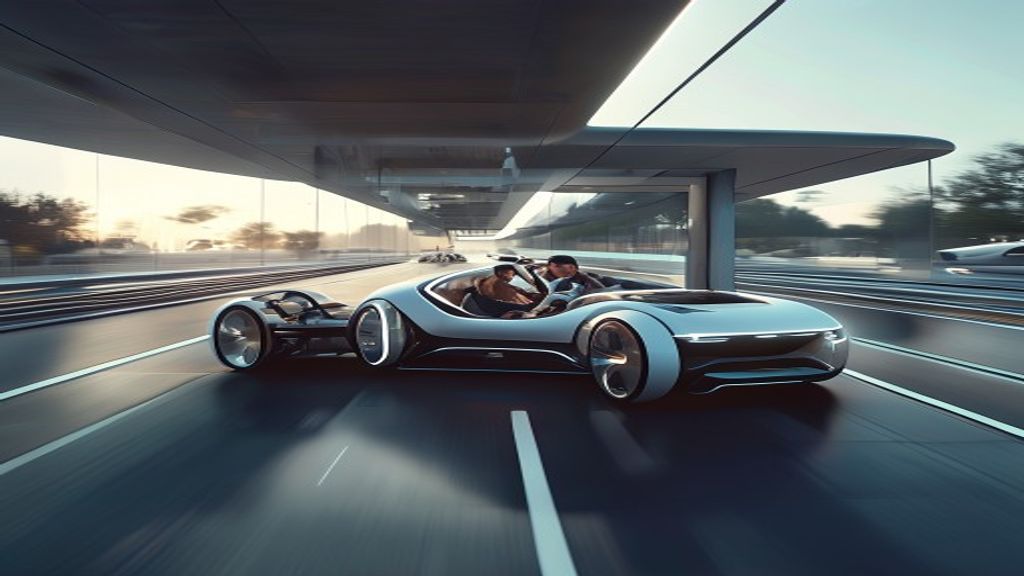
For decades, car design has been constrained by the need to accommodate a human driver and their interaction with the vehicle. Removing these constraints unlocks unprecedented freedom for interior and exterior design:
* **Interior Space:** Cabins could be reconfigured for social interaction, work, or relaxation, much like a lounge on wheels, without the traditional cockpit layout.
* **Ergonomics:** Seating arrangements could prioritize comfort and connectivity over driver visibility and access to controls.
* **Aerodynamics:** Exterior shapes could be optimized purely for efficiency and passenger experience, rather than driver sightlines or control placement.
#### Acknowledging the “Boost for Tesla” Context
While the initial news item highlighted a “boost for Tesla,” it’s crucial to contextualize this. Tesla’s current “Full Self-Driving” (FSD) Beta system, despite its advanced capabilities, still operates under Level 2 autonomy, requiring active human supervision and a human driver ready to intervene. Therefore, current Tesla vehicles *will continue* to require brake pedals, steering wheels, and other manual controls.
The “boost” refers to the *future potential* for companies like Tesla (or Waymo, Cruise, etc.) that aim to develop and deploy truly Level 5 autonomous vehicles. If a manufacturer, including Tesla, were to design a vehicle *exclusively* for Level 5 operation, without any intention for human driving, then this proposed rule change would simplify its regulatory path. It removes a significant barrier for future iterations of fully driverless mobility solutions, not immediate benefits for existing consumer vehicles.
### Addressing Safety and Public Trust
The paramount concern surrounding any advancement in autonomous driving remains safety. NHTSA’s proposal explicitly states that it is not compromising safety standards but adapting them for a new paradigm.
* **System-Centric Safety:** Instead of focusing on human-operator controls, the proposal emphasizes the safety performance of the Automated Driving System itself. This means that the ADS must demonstrate equivalent or superior safety performance to a human driver.
* **Redundant Systems:** Fully autonomous vehicles are expected to incorporate multiple layers of redundancy for critical functions like braking, steering, and perception to ensure continued safe operation even in the event of component failure.
* **Rigorous Testing:** Manufacturers will still need to demonstrate through extensive testing, validation, and data collection that their Level 5 vehicles are safe for public roads.
However, public perception and trust are also critical. Removing familiar controls might initially feel unsettling to some:
* **Transparency:** Clear communication from regulators and manufacturers about the rigorous safety protocols will be essential.
* **Education:** Public education campaigns will be necessary to explain the purpose and safety mechanisms of vehicles designed without traditional controls.
### The Road Ahead: Regulatory Evolution
This DOT proposal signifies a critical step in the ongoing evolution of AV regulation in the United States.
* **Federal vs. State:** While federal agencies like NHTSA set vehicle safety standards, state and local governments largely regulate the deployment and operation of AVs on public roads. Harmonizing these different levels of regulation remains a complex challenge.
* **Future-Proofing:** The proposal demonstrates a proactive approach to regulatory frameworks, attempting to “future-proof” safety standards against rapidly advancing technology.
* **Public Comment Period:** As with all proposed rules, this will undergo a public comment period, allowing stakeholders, safety advocates, and the public to provide feedback, which NHTSA will consider before finalizing the rule.
The journey towards widespread Level 5 autonomy is intricate, blending technological innovation with public policy, safety concerns, and societal acceptance. This proposal to rethink the necessity of a brake pedal for truly driverless cars is a bold testament to the DOT’s commitment to supporting this transformative future, while maintaining a focus on safety as technology evolves.
—
### Frequently Asked Questions (FAQ)
#### What exactly does “axing the brake-pedal requirement” mean?
This proposal means that vehicles *specifically designed* to be driven *exclusively* by an Automated Driving System (Level 5 autonomy), with no provision for human driving, would no longer be legally required to have a manual brake pedal, steering wheel, or other traditional human controls. It does not apply to vehicles where a human driver is expected to take over at any point.
#### Does this mean all new self-driving cars won’t have brake pedals?
No. This rule change is very specific to Level 5 autonomous vehicles, which are currently not widely available to the public. Most “self-driving” features available today, including advanced driver-assistance systems (ADAS) or even partially autonomous systems (Level 2/3), still require a human driver to be ready to take control, and therefore will continue to have all traditional manual controls like brake pedals and steering wheels.
#### How does this impact vehicle safety if there’s no manual control?
The proposal’s intent is not to compromise safety, but to adapt safety standards to the capabilities of a fully autonomous system. Instead of relying on a human to operate controls, the safety responsibility shifts entirely to the Automated Driving System itself. These vehicles are expected to incorporate redundant systems and undergo rigorous testing to demonstrate that their ADS can perform all driving functions, including braking, steering, and acceleration, at an equivalent or superior safety level to a human driver.